

The University of Salford faced challenges with excessive toilet roll consumption and increased washroom maintenance times. These inefficiencies resulted in higher costs and additional strain on facility management resources.
Arrow partnered with the University to implement a high traffic toilet roll dispenser that reduced paper consumption and enhanced overall washroom efficiency.
The Problem
With high footfall in university washrooms, particularly in 24-hour facilities such as the Library Building, the University was experiencing significant overuse of toilet paper. The challenge was to find a sustainable and cost-effective solution to manage consumption while maintaining hygiene and convenience for students and staff.
Excessive toilet paper usage
Strained maintenance teams
Rising operational costs
Uncontrolled consumption in high-traffic campus areas leading to severe product wastage.
Frequent replenishment needs and inefficient existing systems draining facility management resources.
Escalating ongoing expenditure on paper products that impacted the university’s budget.
The Solution
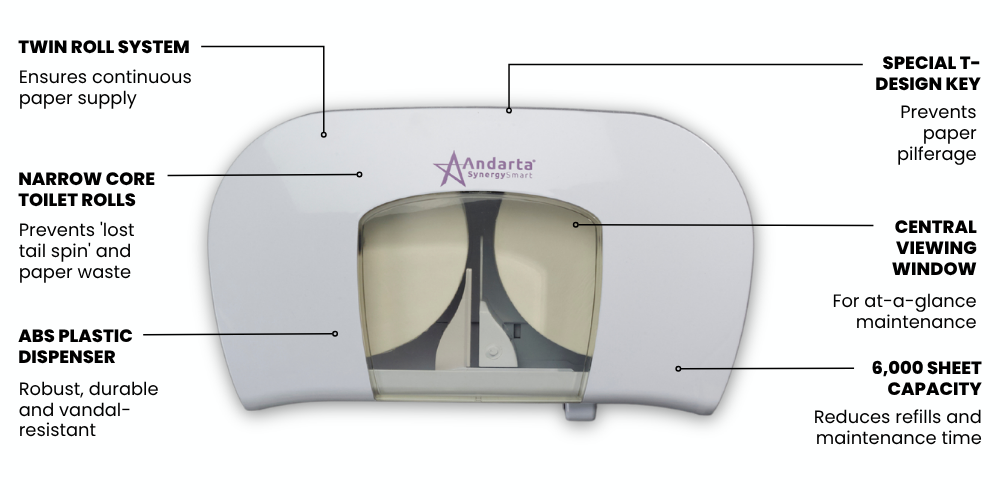
Using Arrow’s WorkSmarter Programme, we conducted an in-depth assessment of the University’s washrooms to determine the most effective toilet paper dispensing system. Following a trial of various dispensing systems across the 24-hour Library Building to monitor performance against historical data, Arrow implemented the Andarta® System 600. This tailored dispensing system was rolled out across the entire campus to manage consumption, reduce waste, and enhance overall washroom efficiency.
The Outcome
Following the trial, Arrow identified the Andarta® System 600 dispensing system provided the optimal solution for the University’s needs. As a result, Arrow County Supplies upgraded all dispensing systems across campus, delivering remarkable improvements:
25% term-time waste reduction
Slashing unnecessary toilet paper usage across high-footfall campus washrooms during the busy autumn and spring terms.
30% summer term paper savings
Projected to further decrease paper consumption during the summer period.
Reduced maintenance demands
Successfully alleviating daily pressures for facility teams, allowing them to focus on other essential tasks across campus.


