What colour tool should you use to clean a toilet? What about a catering kitchen or communal areas?
Introduction
Getting the answer wrong – or not colour-coding at all – can increase the risk of cross-contamination and undermine otherwise effective cleaning procedures.
That’s why colour-coded cleaning equipment has become the recognised standard across facilities management, healthcare, education, hospitality, and food-service environments throughout the UK.
Contents
In this article, we’ll explain the BICSc colour-coding system, explore why it has become an industry best practice, and share practical advice for implementing it successfully across your site.
What Is a Colour-Coded Cleaning System?
A colour-coded cleaning system uses different coloured equipment and tools for different areas of a building. Items such as mops, buckets, microfibre cloths, spray bottles, brushes and janitorial trolleys are assigned to specific cleaning zones to help minimise the risk of cross-contamination.
For example, a cloth used to clean a toilet area should never be used to wipe down a food preparation surface or meeting room table. Colour coding creates a simple visual system that helps cleaning teams use the right tools in the right places every time.
As a result, it has become a widely adopted best practice across offices, schools, healthcare environments, care homes, hospitality venues and commercial kitchens.
The UK’s Four-Colour Cleaning System
The British Institute of Cleaning Science (BICSc) recommends a four-colour system that is widely recognised throughout the UK cleaning industry.
Red: Toilets and high-risk washroom areas
Use for:
- Toilets
- Urinals
- Bidets
- Washroom floors
- Areas surrounding sanitary fixtures
Red is reserved for the highest-risk washroom areas and should remain exclusively within those environments.
Yellow: Washroom fixtures and surfaces
Use for:
- Wash basins
- Mirrors
- Hand dryers
- Washroom walls
- Taps and dispensers
Yellow equipment allows cleaning teams to separate toilet cleaning from the cleaning of general washroom surfaces.
Blue: General low-risk areas
Use for:
- Offices
- Reception areas
- Meeting rooms
- Corridors
- Classrooms
- Shared workspaces
Blue is typically the most widely used colour across commercial facilities.
Green: Food preparation and catering areas
Use for:
- Commercial kitchens
- Food preparation surfaces
- Dining spaces
- Catering areas
- Bar service areas
Green equipment should remain exclusively within food-service environments.
Quick reference colour-coding chart

Why Colour-Coded Cleaning Matters
The primary purpose of colour coding is to help prevent contaminants from being transferred between different areas of a facility.
Without a clear system in place, cleaning equipment can easily be used across multiple zones, increasing hygiene risks and potentially undermining cleaning standards.
Colour coding acts as a simple visual control that helps reduce human error and supports safer cleaning practices.
Supporting consistency across sites
Many facilities have multiple cleaning operatives, contractors, shifts and locations.
A standardised colour-coding system helps ensure everyone follows the same procedures, regardless of who is carrying out the cleaning.
This consistency is particularly important for organisations managing multiple sites.
Simplifying staff training
Visual systems are often easier to understand and remember than lengthy written procedures.
Colour-coded equipment helps new starters quickly identify:
- Which equipment belongs where
- Which tools should never be mixed
- How equipment should be stored
This can reduce training time and improve compliance.
Supporting audits and inspections
When preparing for an audit, colour-coded cleaning demonstrates a structured approach to hygiene management.
It’s a visible indicator that cleaning processes have been considered and implemented consistently across the site.
Common Colour-Coding Mistakes to Avoid
Even organisations that have colour-coded equipment can unintentionally weaken the system through poor practices.
Mixing equipment in storage areas
Storing red, blue, green and yellow equipment together makes mistakes more likely.
Consider using:
- Colour-matched wall brackets
- Dedicated shelving
- Clearly labelled storage areas
- Separate laundry bags
Running out of equipment
When staff cannot access the correct colour, substitutions often occur.
Regular stock checks can help ensure sufficient quantities of:
- Cloths
- Mop heads
- Buckets
- Brushes
- Spray bottles
Inconsistent staff training
Every cleaning operative should understand:
- What each colour represents
- Where equipment should be used
- Storage procedures
- Laundry procedures
Regular refresher training helps maintain standards over time.
Mixing laundry loads
If equipment from different cleaning zones is washed together, some of the benefits of colour coding can be lost.
Where possible, segregate cloths and mop heads by colour during laundering and follow manufacturer recommendations.

Sourcing Colour-Coded Cleaning Equipment Through Arrow Connect
Maintaining consistency across multiple locations can be challenging, particularly when ordering cleaning supplies for different teams and sites.
Our online ordering portal, Arrow Connect, makes sourcing colour-coded cleaning equipment through a single purchasing platform easy by filtering products based on colour.
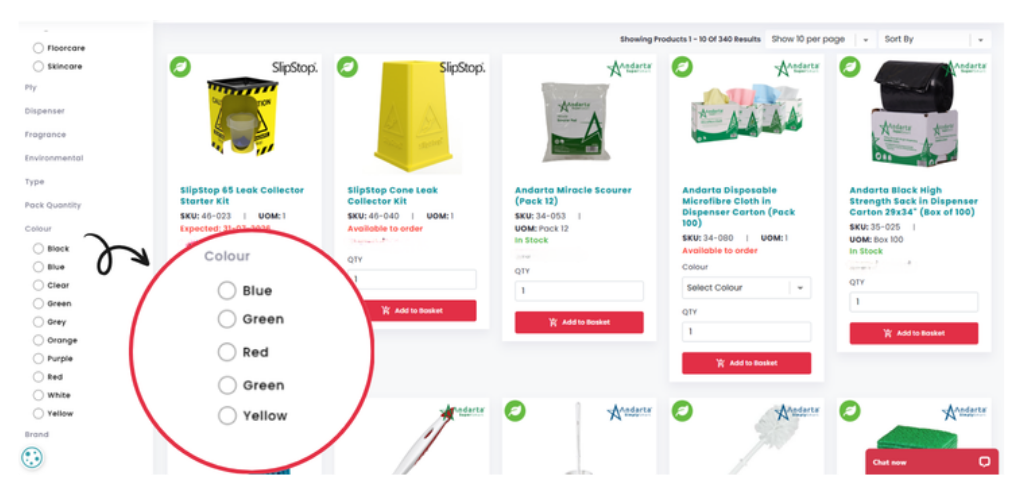
Available product categories include:
- Microfibre Cloths and Wipes: High-performance colour-coded cloths suitable for routine cleaning and surface sanitisation.
- Mopping Systems: Colour-coded mop heads, buckets, handles and wringers designed to support clear zone separation.
- Janitorial Trolleys and Storage Solutions: Multi-compartment trolleys and practical storage solutions that help maintain organisation and compliance.
- Hand Tools and Accessories: Spray bottles, scrubbers, brushes and squeegees available across the full four-colour system.
By standardising procurement, organisations can improve consistency and reduce the risk of equipment crossover.
Small Changes Have a Big Impact
Whether you’re managing a single site or multiple locations, a well-designed cleaning system can help improve consistency, support hygiene standards and simplify day-to-day operations.
Let’s talk about creating a cleaning system that supports your people, your facilities and your standards.