
Celebrating 50 Years of Arrow County Supplies
Estimated reading time: 4 minutes [...]

Estimated reading time: 4 minutes [...]
Love [...]

We’re absolutely thrilled to announce that Arrow is officially a [...]

We’re proud to announce that Arrow has been shortlisted as [...]
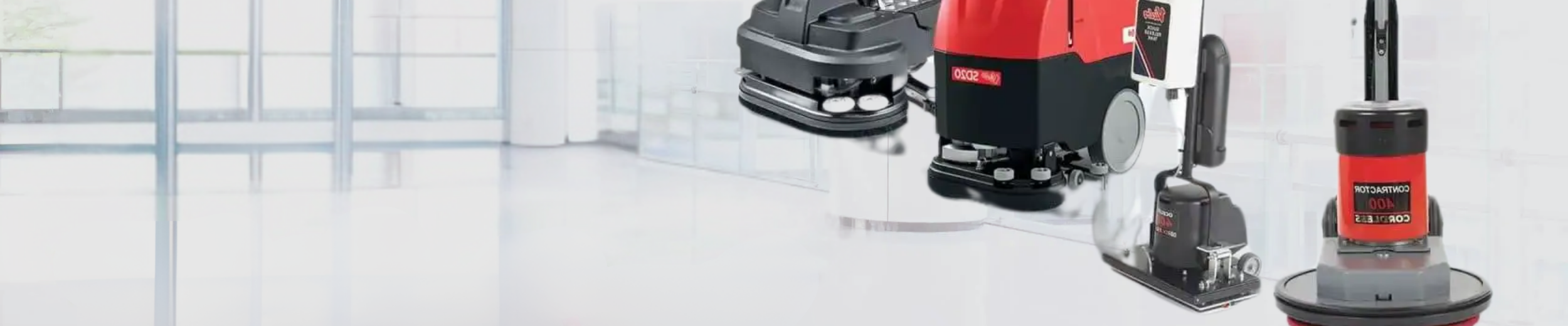
Discover how sustainable floorcare is transforming cleaning practices. From reducing waste to enhancing efficiency, businesses are embracing greener solutions to meet sustainability goals. Explore the future of eco-friendly floorcare in this blog.

We are delighted to announce an exciting new chapter in our journey at Arrow County Supplies as we join Bunzl Group! Managing Director, Bruce Blackledge, highlights this new partnership as a pivotal moment: “Becoming part of the Bunzl Group is an exciting step forward for Arrow, and we’re looking forward to the new opportunities this brings to serve our customers and grow together."
The Switch System, developed by Green Care Professional, stands at the forefront of sustainable innovation in the cleaning industry – providing an ultra-concentrated, Integrated chemical dosing system that helps you clean more efficiently while encouraging less waste.
As the demand for efficient and sustainable cleaning practices grows, powerful solutions such as Quick & Easy are reshaping the way we clean. By embracing concentrated cleaning chemicals, you're not just creating spotless spaces, but also contributing to a cleaner, greener future.
2021 was a landmark year for Arrow, marking our 45th year as a company. It’s certainly been a momentous journey, spanning more than four decades, and including more than four generations of family leadership. From our initial inception in 1976 as a small supplier of vending ingredients, we’ve grown to become one of the UK’s largest independent cleaning and janitorial suppliers.


Disclaimer: The Product Carbon Footprint (PCF) value displayed on our products is provided for informational purposes only. The reported figure relates solely to the specific product assessed and is based on the methodology, scope, assumptions and reporting period applicable at the time of calculation. Carbon footprint values may be updated periodically to reflect changes in product specifications, manufacturing processes, supply chains, data availability or assessment methodologies. The PCF value should not be relied upon as a guarantee of future environmental performance and may not be directly comparable with carbon footprint values reported by other organisations due to differences in methodologies, assumptions or system boundaries.
© Copyright | Privacy Policy | Designed and Built by untitledtm.com | All Rights Reserved
Yes, thanks. That’s a question we get asked a lot. It’s a very common one.
You’ve been into a washroom, you’ve done your cleaning and it all looks clean, and then before too long that dreaded odour starts to come back again. It can be very frustrating.
What we find typically is there’s a few common causes of that.
One is that uric scale can build up in the washroom, and it’s not always visible. Sometimes it can be down your pipework, in your urinals, or even in the grout lines as well. It can build up, and the problem with that is that whilst your regular cleaning will remove surface dirt, uric scale is not as easy to remove, and that can leave an underlying odour in the washroom.
Other causes can be poor ventilation. If you’ve not got good airflow coming through the washroom, it can tend to stagnate a little bit and cause bad odours.
A third one would be hidden areas in the washroom. That might be things like inside your bins. You’re emptying your bin bags regularly, but how often are you actually cleaning out inside the bins, or underneath toilet seats, which isn’t seen as much?
So those are some common causes that we’d come across.
Good question.
There’s no single way as such, but it’s really a case of looking at your washroom and, as mentioned previously, looking at those hidden areas. Check the unseen areas, such as inside your bins and underneath toilet seats.
For uric scale build-up, check grout lines and see if there’s any discolouration there. Then check your pipework and ask yourself: is the water flowing quickly and easily as it should be down the urinals, or is there a delay in it clearing out? Is there a blockage or backfill of water? If so, that could be one of the reasons.
Oftentimes we’re cleaning our washrooms with regular cleaning chemicals, which are great. They do the job, they get the worst of the dirt away, and they leave a nice fragrance afterwards.
However, the challenge you can get with regular fragranced cleaning chemicals is that whilst they’re cleaning what you can see on the surface, they can tend to be masking the underlying issue.
What I would recommend in those situations, especially where uric acid is involved, is using an enzyme-based chemical.
With an enzyme-based chemical, rather than just masking the smell, it actually contains good bacteria, known as enzymes, that will eat away at the bad bacteria which is causing the odours.
They’ll continue to eat away at those until the odour is eliminated.
There’s products within the range, such as Eliminator Washroom Odour Remover & Cleaner, which would be highly effective at that. That is really getting down to the root cause.
It can be used either as a regular chemical for mopping floors or spraying on surfaces, or it can be poured down drains and urinals as well.
Where you get uric acid in a pipe, it works from the outside and slowly narrows down, making the passageway for water smaller and smaller. By using an enzyme-based chemical, it’ll eat away at that uric acid, keep working it back, and widen that pipework.
So as well as getting rid of the odour, it will help the water to flow much more easily.
One important point if you’re using enzyme-based chemicals is not to use them in conjunction with regular chemicals.
A regular chemical will kill the enzymes, making the product less effective and reducing its ability to eliminate the odour.

Your AI-powered cleaning assistant
SOME EXAMPLE OF WHAT YOU MIGHT ASK…
Just about you – paste in your organisation’s website address and we’ll let you know how we can help you!
Compliance – “We’re a hospital, how can you help us comply with NHS purchasing requirements?”
Cost savings – “I need to save money on my supplies. Can you help?”
[arrow_ai_sidebar]