Estimated reading time: 4 minutes
Demand for education cleaning supplies, washroom consumables and hygiene products rises sharply every September…
Introduction
Every September, demand for education cleaning supplies, washroom consumables and hygiene products rises sharply across universities, colleges and higher education institutions as students, staff and visitors return to campus after the summer break.
As occupancy levels rise, so does demand for education cleaning supplies, washroom consumables and hygiene products. At the same time, estates and procurement teams are expected to balance budgets, sustainability targets and growing expectations around the student experience.
Contents
- Introduction
- The September Challenge: From low Occupancy to Full Capacity
- Why Reactive Purchasing Becomes Expensive
- The Value of Product Standardisation
- Supporting the Students Experience Through Hygiene
- Balancing Sustainability and Cost Pressures
- Why Supplier Partnership Matter More Than Ever
- Looking Beyond September
- Frequently Asked Questions
The scale of this challenge is significant. Universities across the UK collectively spend more than £300 million each year on cleaning services, highlighting the critical role cleaning and hygiene operations play in maintaining safe, welcoming and compliant learning environments. At the same time, financial pressures are intensifying, with 72% of universities projected to be operating at a deficit, placing greater scrutiny on operational spending and value for money.
Cleaning and hygiene products may seem like everyday purchases, but they play an important role in maintaining standards, controlling costs and supporting the smooth running of large education estates. With budgets under increasing pressure, adopting a more strategic approach to sourcing and stock management can help institutions improve efficiency, reduce waste and maintain consistently high standards across education facilities.
The September Challenge: From low Occupancy to Full Capacity
During the summer months, many higher education buildings operate at reduced capacity. By September, lecture theatres, libraries, student accommodation and communal spaces quickly return to full use.
The scale of this shift is considerable. UK higher education providers had 2.86 million enrolled students in 2024/25, the vast majority of whom return to campus within the same few opening weeks of the academic year.
Products such as toilet tissue, hand towels, soap refills, cleaning chemicals and waste-management often experience a sharp increase in usage.
Without adequate preparation, institutions can face product shortages, emergency orders and unnecessary costs.
The challenge is not simply ensuring enough stock is available. It’s about having the right products in the right locations when demand increases.
Why Reactive Purchasing Becomes Expensive
When demand rises unexpectedly, procurement teams can find themselves making last-minute purchasing decisions.
Emergency orders, multiple suppliers and inconsistent product ranges often increase costs and add unnecessary complexity.
Across large education estates, where purchasing may span multiple buildings or campuses, this approach can also make spend harder to monitor.
Treating September as a predictable event rather than an unexpected challenge allows teams to forecast demand, purchase more effectively and avoid avoidable costs.
The Value of Product Standardisation
One of the biggest opportunities in cleaning and hygiene procurement is product standardisation.
Across many campuses, different buildings or contractors may use different products for the same purpose. Over time, this can lead to duplicated stock, unnecessary administration and reduced visibility of spend.
For estates teams managing multiple sites, fewer product variations often lead to greater control and easier day-to-day management.
Supporting the Students Experience Through Hygiene
Student expectations continue to evolve, with universities increasingly expected to provide environments that support wellbeing alongside academic achievement.
According to the 2026 Student Academic Experience Survey, students place considerable importance on the overall quality of their university experience.
The same survey found that the proportion of students rating their course as good value for money climbed to 45% in 2026, up from 37% the year before and the highest figure recorded in over a decade, with facilities cited alongside teaching quality and course content as key drivers of that perception.
While teaching remains central, the wider campus environment also influences how students perceive an institution.
The impact of good hygiene provision goes beyond perception, too. The hidden cost of employee sickness to UK businesses has risen by £30 billion since 2018, according to IPPR, with £25 billion of that increase coming from people working while unwell rather than staying off sick. Washrooms and shared hand-contact surfaces are among the most direct transmission routes for the seasonal illnesses behind that trend, making hygiene provision in high-footfall campus spaces a meaningful lever rather than just a compliance box to tick.
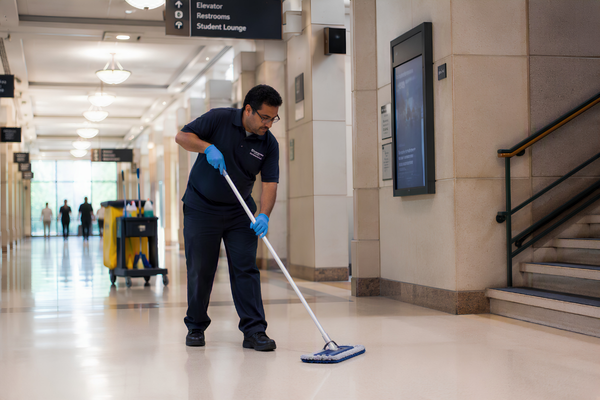
For estates teams, hygiene is no longer just a maintenance issue. It contributes to perceptions of quality, care and professionalism across the campus.
Balancing Sustainability and Cost Pressures
Many universities and colleges are pursuing ambitious sustainability goals while continuing to manage budget pressures.
This can make procurement decisions more challenging.
The good news is that sustainability and cost control do not have to be competing priorities. Product selection, waste reduction, responsible sourcing and usage monitoring can all support both objectives when approached strategically.
The focus should be on long-term value rather than unit cost alone.
Working with a knowledgeable supplier can help institutions identify opportunities to improve efficiency while supporting both environmental and financial goals.
Why Supplier Partnership Matter More Than Ever
During periods of high demand, supplier relationships become increasingly valuable.
Reliable stock availability, product expertise and consistent delivery can make a noticeable difference when campuses return to full occupancy.
For higher education organisations managing multiple sites, suppliers who understand sector-specific challenges can help reduce complexity and improve resilience throughout the academic year.
The strongest partnerships go beyond order fulfilment. They help institutions review product ranges, anticipate demand and identify opportunities to improve performance across the estate.
Looking Beyond September
Although September creates one of the busiest periods of the year, the organisations that manage it most successfully look beyond the start of term.
By reviewing usage patterns, standardising key education cleaning supplies and planning ahead, universities and colleges can build more efficient, resilient operations throughout the academic year.
Cleaning and hygiene products may be everyday essentials, but their impact extends far beyond the facilities cupboard. They influence operational performance, user experience and budget management across the whole estate.
At Arrow County Supplies, we work with universities, colleges and higher education institutions across the UK to simplify cleaning and hygiene procurement through expert advice, dependable supply and practical solutions.
As campuses prepare for another academic year, taking a proactive approach today can help create cleaner, more efficient learning environments tomorrow.
Frequently Asked Questions
Publisher: Emily Atkin