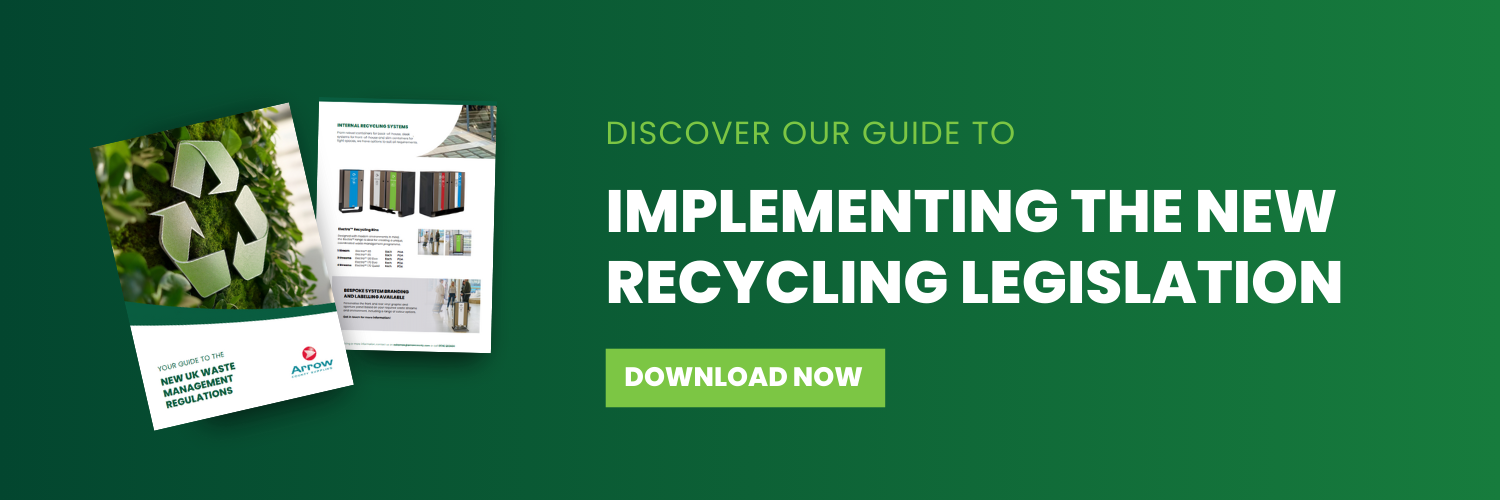
Big changes are coming to the way businesses in England manage their waste. Starting 31 March 2025, new ‘Simpler Recycling’ legislation requires businesses with more than 10 full-time employees to implement separate recycling systems. By 31 March 2027, this requirement will extend to smaller businesses with 10 or fewer employees.
These new rules aim to standardise recycling processes across England, making waste collection more consistent while helping the Government meet its environmental targets.
What does this mean for your business?
In simple terms, businesses will need to sort recyclable materials—such as paper, glass, plastic, and metal—before disposal. Food waste must also be collected separately for appropriate treatment, ideally through anaerobic digestion.
Starting in April 2025, the general public and other key stakeholders will be able to report businesses that fail to comply, with penalties—including hefty fines—for those that don’t follow the new rules.
In summary, the key requirements are:
• Separate bins for glass, metal, plastic, paper, and cardboard
• Food waste collected separately
• No mixing of recyclables with general waste
Businesses must check with their waste collection providers to ensure compliance
Overcoming possible challenges
While these regulations are designed to streamline recycling practices, some businesses may face concerns or challenges as to managing their implementation, including:
• Costs of implementation (bins, signage, and staff training)
• Space constraints for additional waste containers
• Managing ‘waste contamination’, ensuring recyclables aren’t mixed incorrectly
Industries like hospitality, catering, leisure, and retail may find the new legislation particularly demanding due to fast-paced environments, high waste volumes, and staff turnover. However, with careful planning and staff engagement, all businesses can successfully adapt.
A step-by-step approach to compliance
1. Review your current waste disposal practice: Asses your waste streams, identify potential ‘problem’ areas (e.g. smaller areas where fitting additional recycling systems could be challenging), and pinpoint where improvements can be made.
2. Create a clear implementation plan: Engage employees with the new practices through clear instructions and interactive training methods – posters, group discussions and hands-on activities. Ensure bins are clearly labelled with striking, colour-coded signage and strategically placed to keep recycling simple.
3. Prepare ahead and start early: Getting ready well before the deadline gives you time to make any changes required and ensure a smooth implementation.
It’s not just about the environmental benefits – compliance makes business sense
Beyond meeting legal requirements, businesses that implement effective recycling systems typically experience a range of additional benefits:
• Lower waste management cost, especially as landfill taxes on the increase (set to rise by 21.6% in 2025/26 from the current rate of £103.70 per tonne).
• Improved resource efficiency, reducing unnecessary waste.
• Stronger brand reputation, particularly as sustainability becomes increasingly important for customers.
• Competitive advantage – early adopters of sustainable practices often stand out in their industries.
By taking a proactive approach, businesses can turn these regulations into an opportunity to improve efficiency, reduce costs, and strengthen their environmental reputation – meaning now is the time to get ready for ‘Simpler Recycling’!
Need recycling supplies?
For recycling bins, containers, signage and waste management solutions, visit www.arrowcounty.com or call us on 01743 283600.